The Actual Cause of Knitwear Pilling (It's Not Simply 'Cheap Fabric')
Pilling on a sweater gets read as a straightforward signal of cheap, low-quality fabric, but the actual mechanism behind pilling involves specific fiber length and friction factors that mean even genuinely higher-quality knitwear can pill under the right conditions, and lower-quality knitwear can sometimes pill less than expected under different conditions.

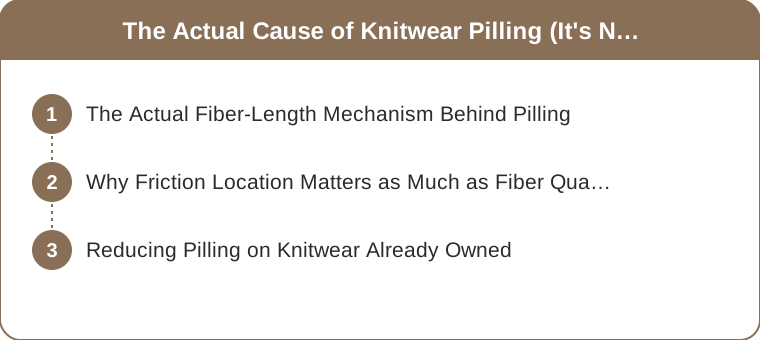
The Actual Fiber-Length Mechanism Behind Pilling
Pilling happens when shorter, loose fiber ends on a fabric’s surface work free from the main yarn structure through repeated friction and then tangle together into small visible balls — fabrics made with shorter staple fibers genuinely have more of these loose fiber ends available to pill in the first place, regardless of how expensive the overall garment is, while fabrics made with longer staple fibers genuinely have fewer loose ends available and pill less as a direct result of fiber length rather than price.

Why Friction Location Matters as Much as Fiber Quality
Pilling concentrates specifically at high-friction contact points — under the arms, at the sides where a bag strap rubs, at the lower back where a seatbelt or waistband contacts — meaning identical fabric pills considerably more at those specific friction points than elsewhere on the same garment, which is why pilling often appears patchy rather than uniform even on a single sweater.
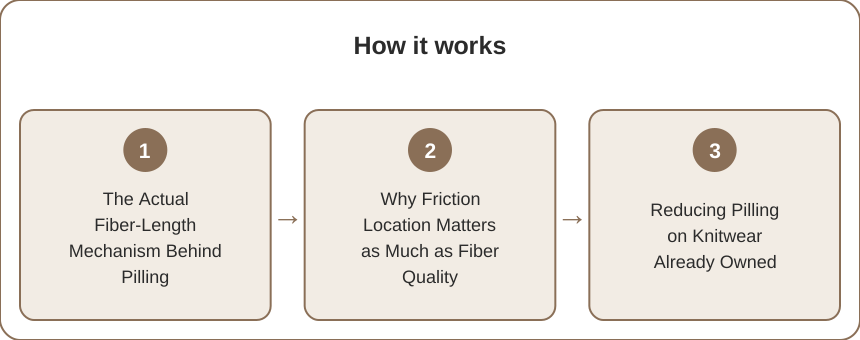
Reducing Pilling on Knitwear Already Owned
Reduce friction at the garment’s own known high-contact points specifically — rotating which bag strap side is used, avoiding tucked-in styling under a tight waistband where friction concentrates — and use a fabric shaver regularly on any pills that do form, since removing existing pills also removes the tangled fiber mass before it can trap and tangle in more of the loose surface fibers nearby.
Pilling results from shorter, loose fiber ends working free through repeated friction and tangling into visible balls, meaning fabrics with shorter staple fibers have more loose ends available to pill regardless of price, and pilling concentrates specifically at a garment’s own high-friction contact points rather than appearing uniformly — so reducing friction at those specific known contact points and using a fabric shaver regularly to remove pills before they trap more surrounding fiber genuinely reduces pilling on knitwear already owned, quality aside.
Keep Reading
This article is for general styling and informational purposes only. Trends, sizing, availability and pricing may vary by brand and season.